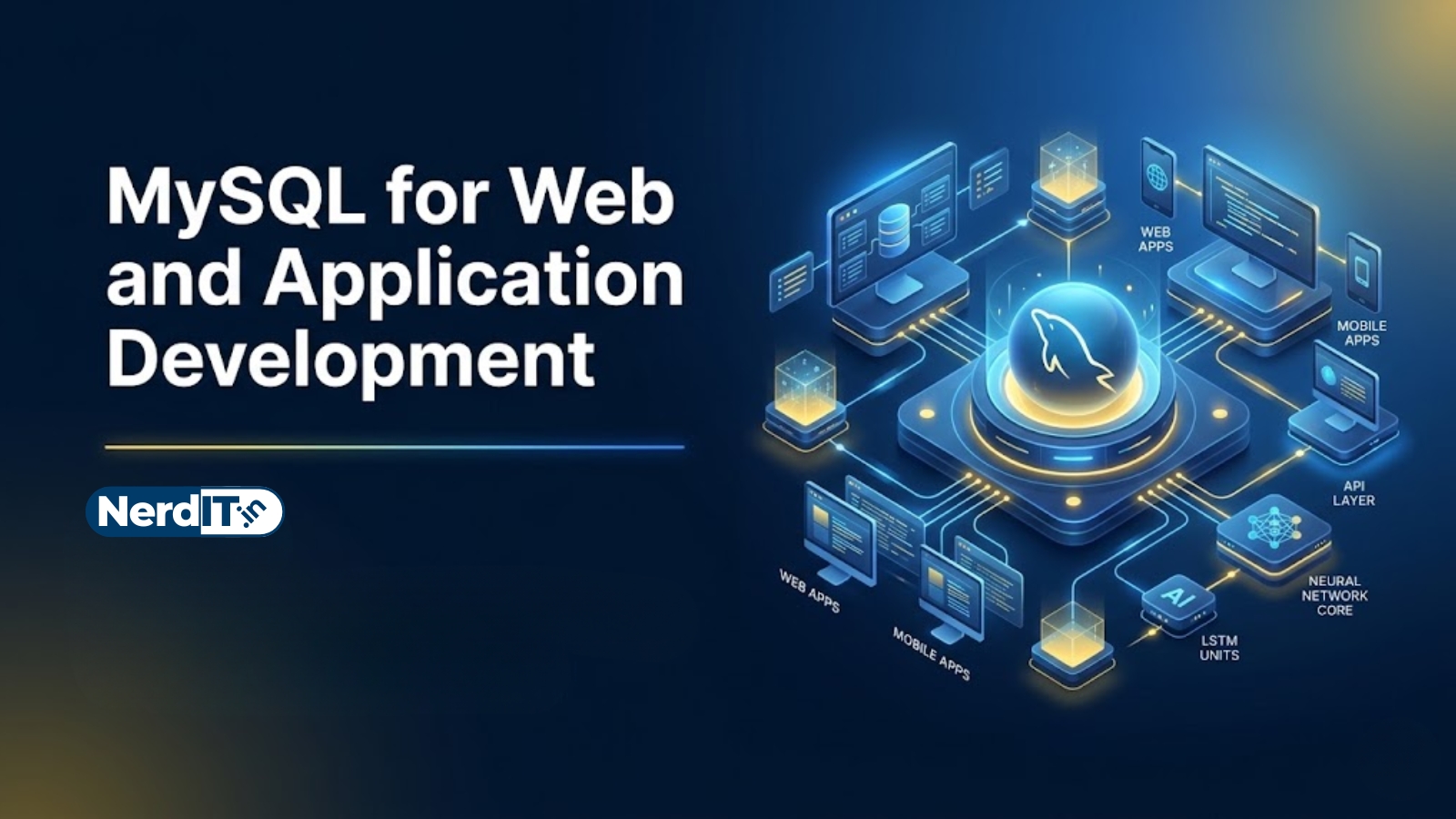
MySQL for Web and Application Development
Learn MySQL Programming from basics to advanced with hands-on database training. This course covers database design, SQL queries, table creation, joins, functions, stored procedures, triggers, and database management techniques. Students will gain practical experience in managing and developing databases for web and software applications using MySQL.
What's included
28
Lessons
22h 53m
Duration
Certificate
What you'll learn
Skills and outcomes you'll walk away with
Chapter 1 : Database Foundations
Chapter 2 : Relational Model Terms
Chapter 3 : Types of Keys
Chapter 4 : Referential Integrity Rules
Chapter 5 : MySQL Overview
Chapter 6 : SQL Command Categories
Course curriculum
28 lessons • 22h 53m total
MySQL for Web and Application Development28 lessons
Chapter 1 : Database Foundations
Chapter 2 : Relational Model Terms
Chapter 3 : Types of Keys
Chapter 4 : Referential Integrity Rules
Chapter 5 : MySQL Overview
Chapter 6 : SQL Command Categories
Chapter 7 : MySQL Data Types
Chapter 8 : Numeric Data Types
Chapter 9 : Date & Special Types
Chapter 10 : String Data Types
Chapter 11 : Create Table & Constraints
Chapter 12 : Foreign Key Definition
Chapter 13 : Alter table
Chapter 14 : Constraints Reference & DROP TABLE
Chapter 15 : Insert Into
Chapter 16 : UPDATE & DELETE
Chapter 17 : SELECT Basics
Chapter 18 : LIKE & NULL
Chapter 19 : ORDER BY
Chapter 20 : Single-Row Functions
Chapter 21 : Aggregate Functions
Chapter 22 : GROUP BY & HAVING
Chapter 23 : SQL Joins
Chapter 24 — Set Operations
Chapter 25 : Practice Exercises
Chapter 26 : Advanced SQL Concepts
Chapter 27 : Database Normalization
Chapter 28 : Real-World Applications & Tools
Certification path
Certification exam
84 multiple-choice questions • 70% passing score required
Comprehensive MySQL Database Design and Management System Project
The objective of this final project is to demonstrate mastery of MySQL programming by designing, implementing, and querying a relational database based on a real-world business scenario. Step 1: Scenario Selection. Choose a domain such as an E-commerce Platform, a Hospital Management System, or a University Registrar. Step 2: Database Schema Design. Design a schema consisting of at least five related tables. You must ensure the design adheres to Third Normal Form (3NF) to minimize data redundancy. Step 3: DDL Implementation. Write a SQL script to create the database and tables. You must use appropriate data types and strictly enforce referential integrity using Primary Keys, Foreign Keys, and NOT NULL constraints. Step 4: Data Seeding. Populate each table with a minimum of 10 realistic records to allow for comprehensive testing. Step 5: Advanced Querying. Develop five complex queries that provide business insights. These queries must utilize multiple JOIN types (INNER, LEFT), subqueries, and aggregate functions with GROUP BY and HAVING clauses. Step 6: Database Objects. Implement at least one View to simplify data access for end-users and one Stored Procedure to automate a repetitive task. Step 7: Final Submission. Submit a single .sql file containing all scripts, organized with clear headings and comments.
Verified certificate
Earn a verified PDF certificate with unique verification ID upon completion • ₹499
Related courses
More free Development courses with verified certificates
 Supervised Machine Learning: Regression Algorithms with PythonBeginner
- TEST 3Beginner
- Introduction to Flask and RestAPIsBeginner
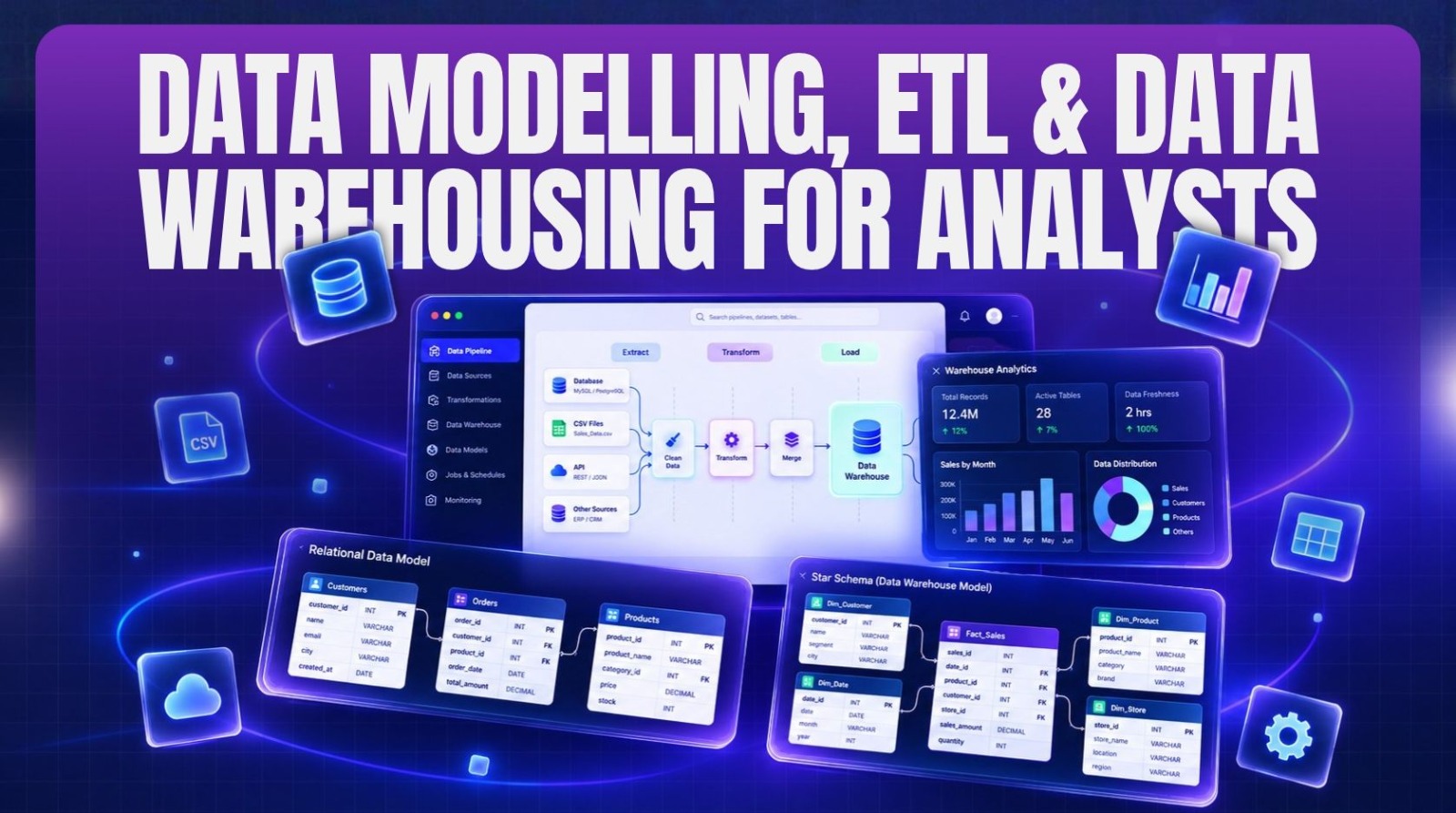 Data Modelling, ETL & Data Warehousing for AnalystsAdvanced
Reviews & ratings
No reviews yet — be the first!
Free
Free course — learn at your own pace
Certificate: ₹499
Your certificate preview
₹499 — pay only to certify
NIT-8F3K-2Q7AThis is to certify that
has successfully completed the course
- Unique verification ID — provably genuine
- Shareable & ready for your LinkedIn profile
- Verifiable by anyone, anytime on our verify page
- Learn 100% free — the certificate is optional